

In brief
- AI dominated CES trend predictions, with widespread adoption reported across workplaces, homes, vehicles and healthcare.
- Futurist Brian Comiskey outlined a future built on continuous monitoring, personalised systems and software-defined products.
- Yet questions remain over acceptance of AI in the workplace and return on investment, despite heavy enterprise spending on generative AI.
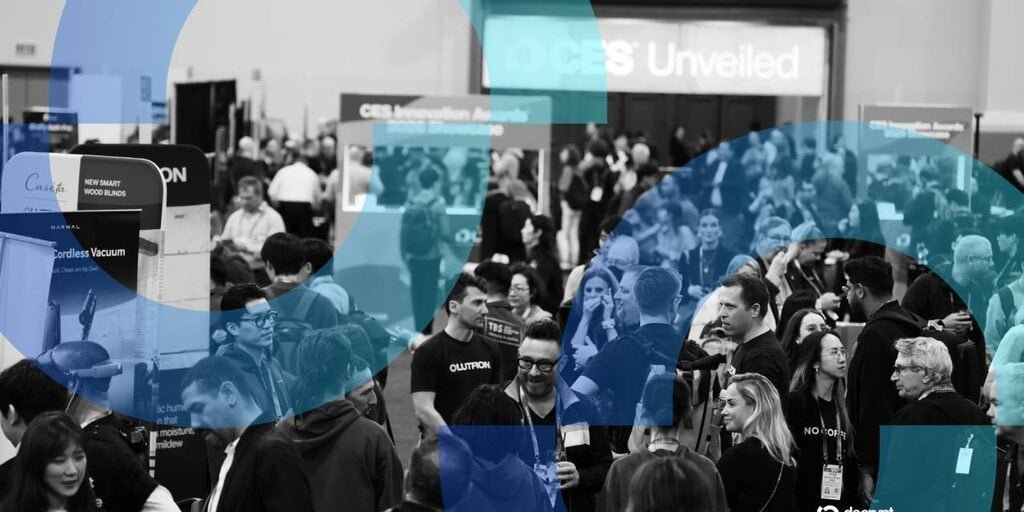
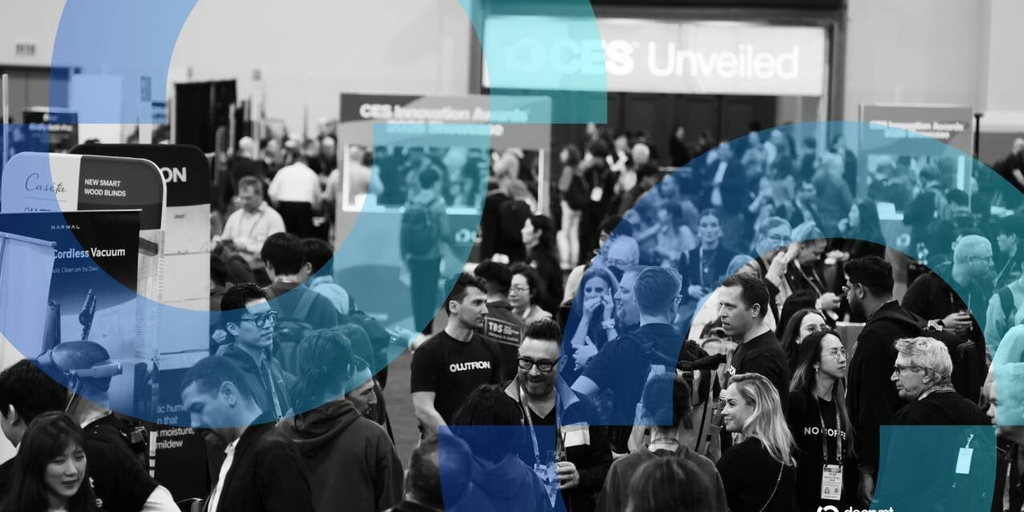
Blockchain received only a brief mention at a Consumer Electronics Show (CES) talk focused on technology trend predictions, as artificial intelligence dominated discussion about the future of consumer and enterprise technology.
The CES 2026 Trends to Watch talk, held Monday, featured Brian Comiskey, senior director of innovation and trends at the Consumer Technology Association (CTA). Comiskey described the 2020s as a decade of “intelligent transformation,” driven primarily by advances in AI.
“This is a wave of innovation brought about by the rise of artificial intelligence and its increasing capabilities, which is changing the operations of enterprises, the functions of workers and the lives of consumers,” Comiskey said.
Blockchain was referenced only in passing near the end of the discussion, described as offering “unhackable layers of security,” without further explanation or elaboration.
“Intelligent platforms”
Despite ongoing economic uncertainty, including inflationary pressures and tariffs, the CTA projects U.S. consumer technology industry revenue will reach $565 billion dollars in 2026, indicating continued consumer demand for new technologies.
He outlined a future in which hardware devices increasingly function as adaptive, data-driven platforms. Comiskey said smart glasses and extended reality headsets are being deployed in industrial settings, including warehouse optimization, remote surgical assistance, and medical applications.
“We’re going to see intelligent transformation driving a fundamental shift,” he said. “The devices and hardware we know and love are becoming intelligent platforms designed to deliver deeply personalized, adaptive experiences.”
Cars are undergoing a similar transformation, Comiskey said, arguing that they’re evolving into “software-defined ecosystems,” featuring over-the-air updates, modular hardware and open operating systems.
“Cars are no longer just machines,” he said. “Consumers now expect their cars to adapt to them, not the other way around.”
He highlighted AI-powered driver profiles, predictive maintenance and partnerships between automakers, technology companies and content platforms as central to this shift. Just this week, Nvidia announced a suite of open AI models designed for self-driving cars.
Healthcare and smart homes
In healthcare, Comiskey predicted increased use of continuous monitoring technologies. He said mental health tools are moving from “passive tracking to proactive support,” with startups using voice biomarkers to detect early signs of depression and anxiety. He also cited conversational AI for cognitive behavioural therapy, biometric sleep monitoring and personalised nutrition platforms.
The panel also focused on the evolution of the smart home, which Comiskey described as becoming both more personalized and more integrated into health monitoring.
Connected home systems, he said, are increasingly designed to anticipate user needs by learning daily routines and preferences, adjusting lighting, climate and entertainment automatically. Devices such as smart mirrors, smoke detectors and doorbells are being positioned as health, safety and productivity tools.
The session also addressed changes in business models enabled by these technologies. Comiskey said “hybrid monetization” is becoming standard, combining subscriptions with advertising, premium add-ons, tipping and creator-focused revenue streams.
“This flexibility helps platforms reach broader audiences while giving creators more ways to monetize,” he said, though it also suggests customers will be squeezed for more money for services they could once just pay for outright before subscription services became standard.
Comiskey also presented data suggesting AI adoption in the workplace is now widespread. According to CTA research covering European, South Korean and US markets, awareness of AI exceeded 90% in all surveyed regions. More than 40% of workers in every country surveyed reported using AI at work, with the US leading at nearly 63%.
“Our data is showing that AI is evolving from something experimental into something essential for the enterprise and workers,” Comiskey said, adding that US workers who use AI reported saving an average of 8.7 hours per week.
A mixed outlook
Despite Comiskey’s optimism, beyond CES AI has met with a mixed reception, with questions remaining about how workers and consumers are responding to widespread AI deployment. Some employees have criticised AI workplace tools as inefficient, dubbing what it produces “workslop” and arguing that correcting AI-generated errors can increase workloads rather than reduce them.
A July study by the MIT Research Lab found that despite between 30 and 40 billion dollars in enterprise investment in generative AI, 95% of organisations surveyed reported no measurable return on investment.
Using AI to predict human actions and behavior also raises issues around privacy and data protection.
“Most organizations fall on the wrong side of the GenAI Divide,” the MIT report concluded. “Adoption is high, but disruption is low.”
Generally Intelligent Newsletter
A weekly AI journey narrated by Gen, a generative AI model.
