


The March 1 White House deadline to resolve stablecoin reward disputes under the CLARITY Act expired without a deal. The Senate Banking Committee leaders are preparing a new markup attempt later in Washington. Banks, crypto firms, and administration officials remain locked in yield negotiations. Lawmakers now face mounting pressure to finalize text before a potential 2026 vote.
CLARITY Act Markup Plans Take Shape
According to Crypto In America, senators are considering new markup dates this month after a previous attempt stalled. If the committee advances the CLARITY Act, leaders would prepare it for a full Senate vote. However, negotiators continue to debate stablecoin reward structures.
Patrick Witt, executive director of the White House Crypto Council, set the March 1 deadline for compromise. That deadline passed without a public deal. Still, crypto stakeholders insist discussions continue.
Summer Mersinger, CEO of the Blockchain Association, said negotiations on the CLARITY Act involve multiple parties and require sustained engagement. She posted on X that meaningful policy differences take time to resolve.
Meanwhile, a banking source told Crypto In America that both sides still exchange legislative text. That source said negotiators should not overindex on March 1. However, another banking official acknowledged ongoing disagreements over stablecoin yields.
Yield Dispute Slows Progress
Bank representatives say stablecoin balances should not generate interest. They argue that crypto firms attempt to reintroduce yield through rewards, staking, and membership programs. According to one banking source, that issue currently blocks consensus.
Despite this skepticism, JPMorgan says that the crypto bill will likely pass by mid-year. Banks want any lending or staking programs to remain active, bona fide, and time-locked. They insist returns must tie directly to investment activity. In contrast, banks worry vague language could allow firms to recreate interest under new labels.
The White House reportedly prefers resolving the CLARITY Act details through agency rulemaking. However, banks question whether that approach protects their core principles. Notably, the Office of the Comptroller of the Currency added pressure last week.
In proposed rulemaking tied to the GENIUS Act, the agency indicated stablecoin rewards may face tighter restrictions than expected. That signal strengthened the banks’ negotiating position. Still, stakeholders say discussions remain active.
Amanda Tuminelli, executive director of the DeFi Education Fund, said DeFi issues have taken a backseat to yield debates. She noted that senators appear to close out certain topics while awaiting updated bill text.
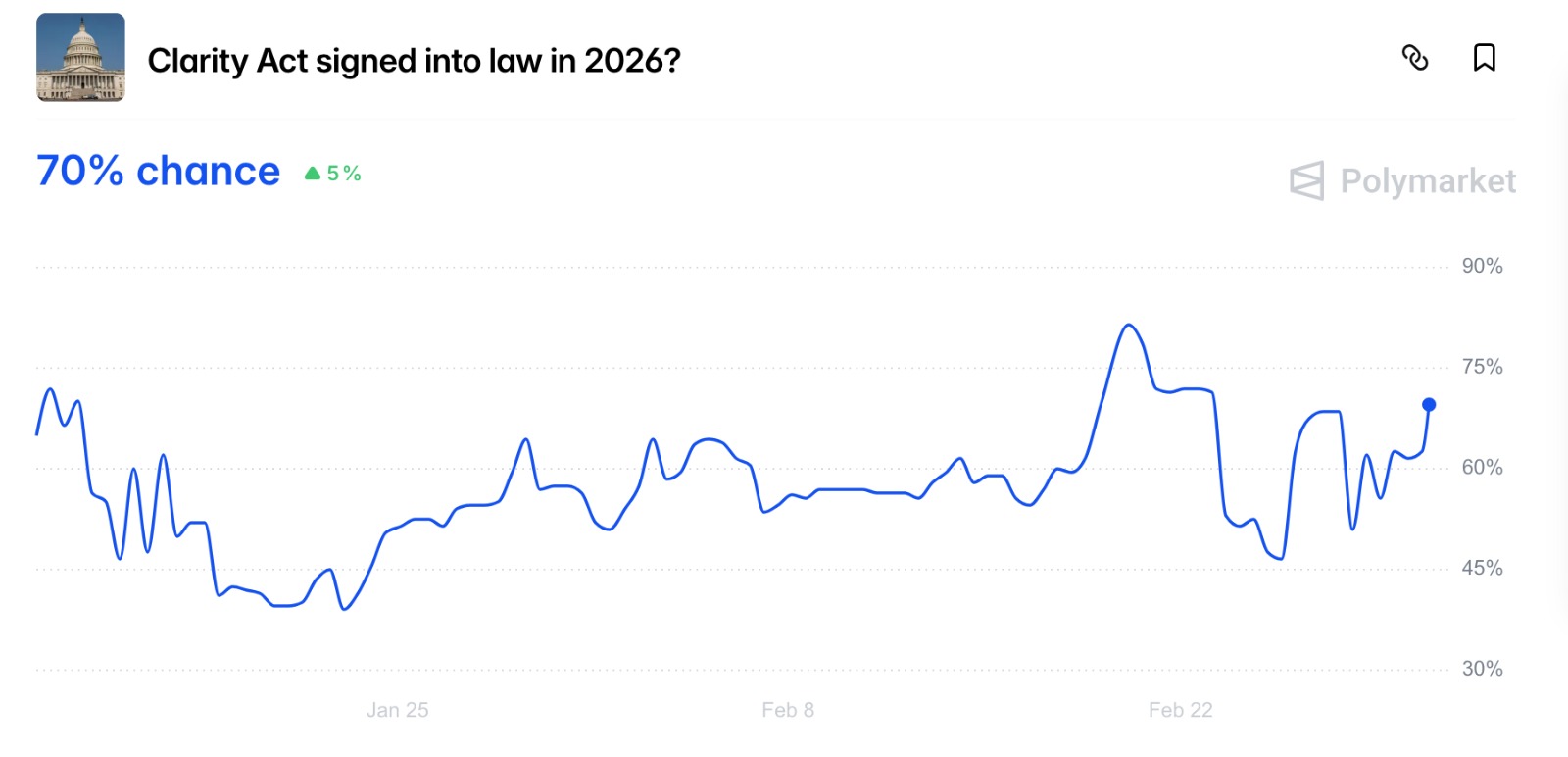
Prediction markets show mixed expectations for the CLARITY Act. According to Polymarket, traders assign a 70% chance that lawmakers will sign the bill into law in 2026. Meanwhile, Kalshi shows only a 6% probability of passage before April, 22% before May, and 41% before June.
 Source: Polymarket
